Image to 3D AI: How It Works and Which Photos Give the Best Models
How AI image-to-3D models rebuild a full 3D object from a single picture, what they are good and bad at, and how to choose photos that give clean, printable models.
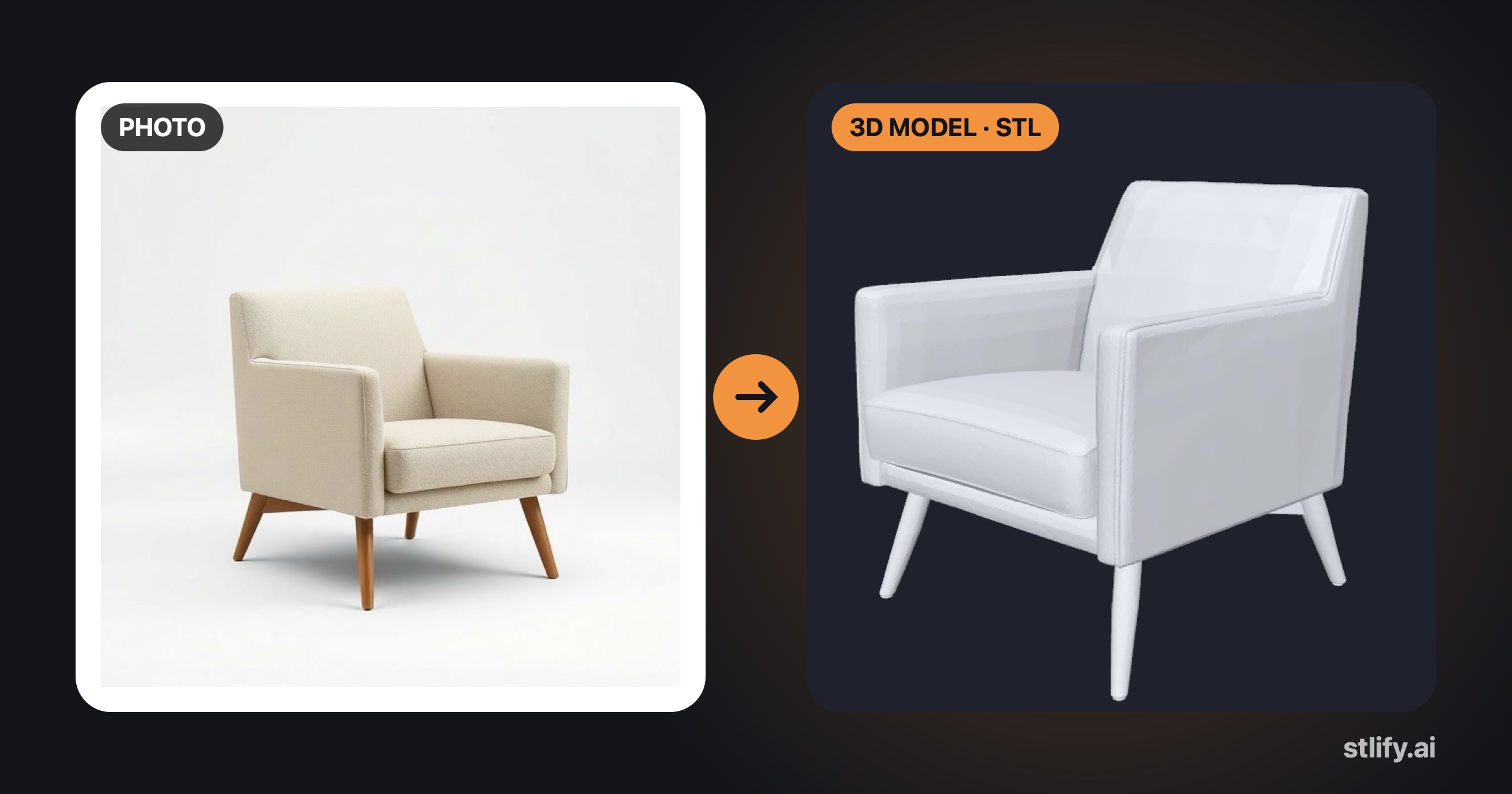
- Image-to-3D AI predicts a full 3D shape from one picture by combining what it sees with what it has learned about similar objects.
- It is strongest on clear, single objects: furniture, shoes, bags, pets and portrait busts.
- It struggles with very thin parts, transparent objects and tightly cropped photos.
- For printing, look at the bare grey geometry — not the coloured texture — before you download.
A photo is flat. So how can a computer produce the back of a chair it has never seen? Modern image-to-3D models are trained on huge libraries of 3D objects paired with renders of them. They learn what chairs, dogs and sneakers usually look like from every side, and use that knowledge to complete the parts your photo does not show.
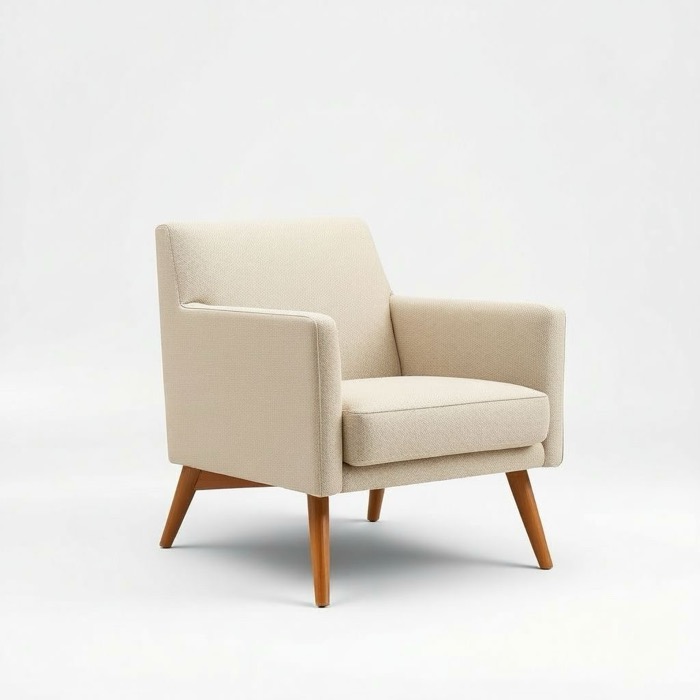
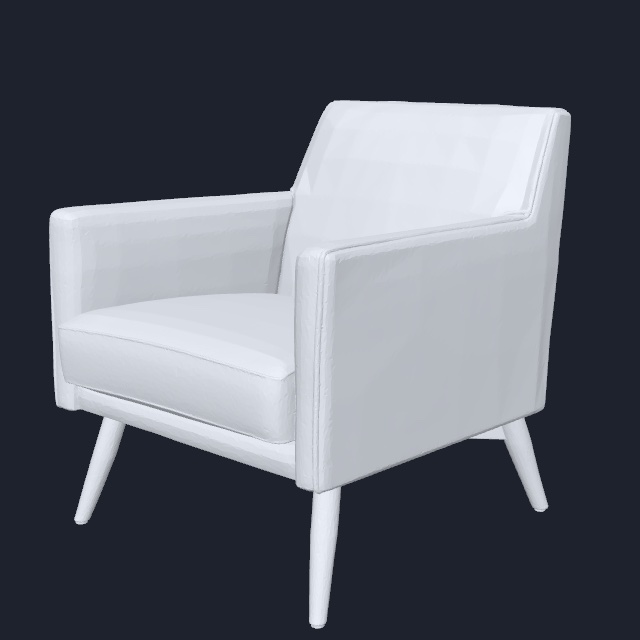
What happens inside an image-to-3D model
- Cut-out: the subject is separated from the background.
- Shape prediction: the model estimates a 3D structure (often as a grid of tiny volume cells) that matches the silhouette and shading.
- Surface extraction: that volume is turned into a triangle mesh — the part you can export as STL.
- Texture: colours from the photo are projected onto the mesh, and the hidden sides are painted to match.
Stlify uses a state-of-the-art open model of this kind (TRELLIS-2 by Microsoft Research) and adds two checks of its own: if a result comes out flat or fails, it automatically retries with a second engine, and if nothing works your credits go back.
What image-to-3D AI is great at
- Pets photographed whole — dogs, cats, rabbits, birds.
- Furniture and products on a plain background.
- Portrait busts (head and shoulders).
- Cars from a three-quarter angle.
- Toys, figurines and collectibles.
Where it still struggles
- Very thin parts: whiskers, antennas and jewellery chains come out fragile or merged.
- Glass and mirrors: transparent or reflective surfaces confuse depth estimation.
- Cropped subjects: a face-only crop may become a flat card instead of a head.
- Text and logos: fine printed detail is a texture, not geometry.
A quick checklist before you upload
| Check | Why it matters |
|---|---|
| Whole subject visible | The AI cannot invent a missing leg or wheel reliably |
| One subject only | Two objects become one merged lump |
| Soft, even light | Harsh shadows read as dents or bumps |
| Plain background | Cleaner cut-out, cleaner edges |
| Sharp focus | Blur becomes soft, melted detail |
FAQ
Is image-to-3D AI accurate enough for 3D printing?
For figurines, busts, pets and decorative objects, yes. For functional parts with exact dimensions, use CAD — AI shapes are visually right, not measured.
Can it make a 3D model from one image?
Yes. Single-image reconstruction is exactly what these models do; extra angles are not required.
Who owns the 3D model?
On Stlify you own models made from photos you have the right to use, including for selling prints.